Framed vs Frameless Shower — Which Fits Your Bath?
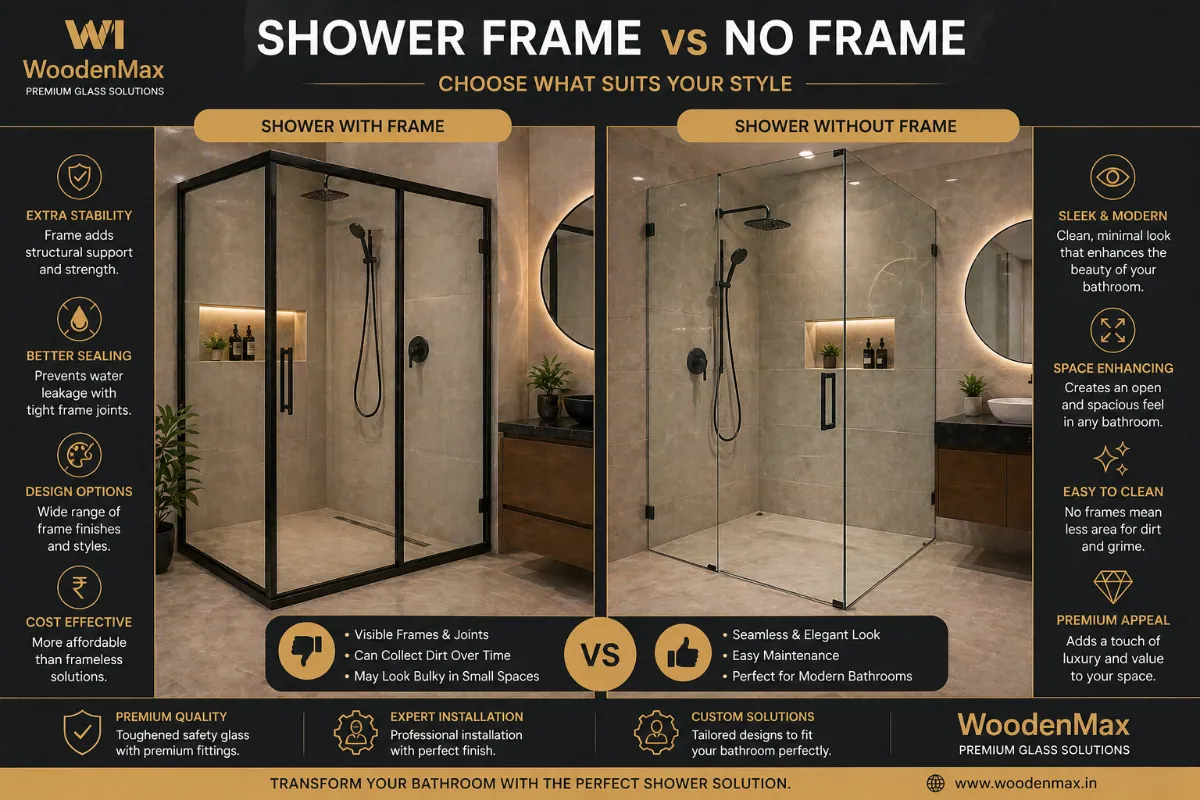
Framed showers carry glass in metal channels; frameless showers minimise visible metal and lean on thicker glass and point fittings. Both are valid — they optimise for different budgets and wall conditions.
Continuous aluminium profiles spread loads and can forgive minor wall waviness better than discrete clamps. That forgiveness often translates into simpler install paths and sometimes lower total quotes for mid-spec projects — though premium slim profiles can narrow the gap.
Frameless: what you pay for
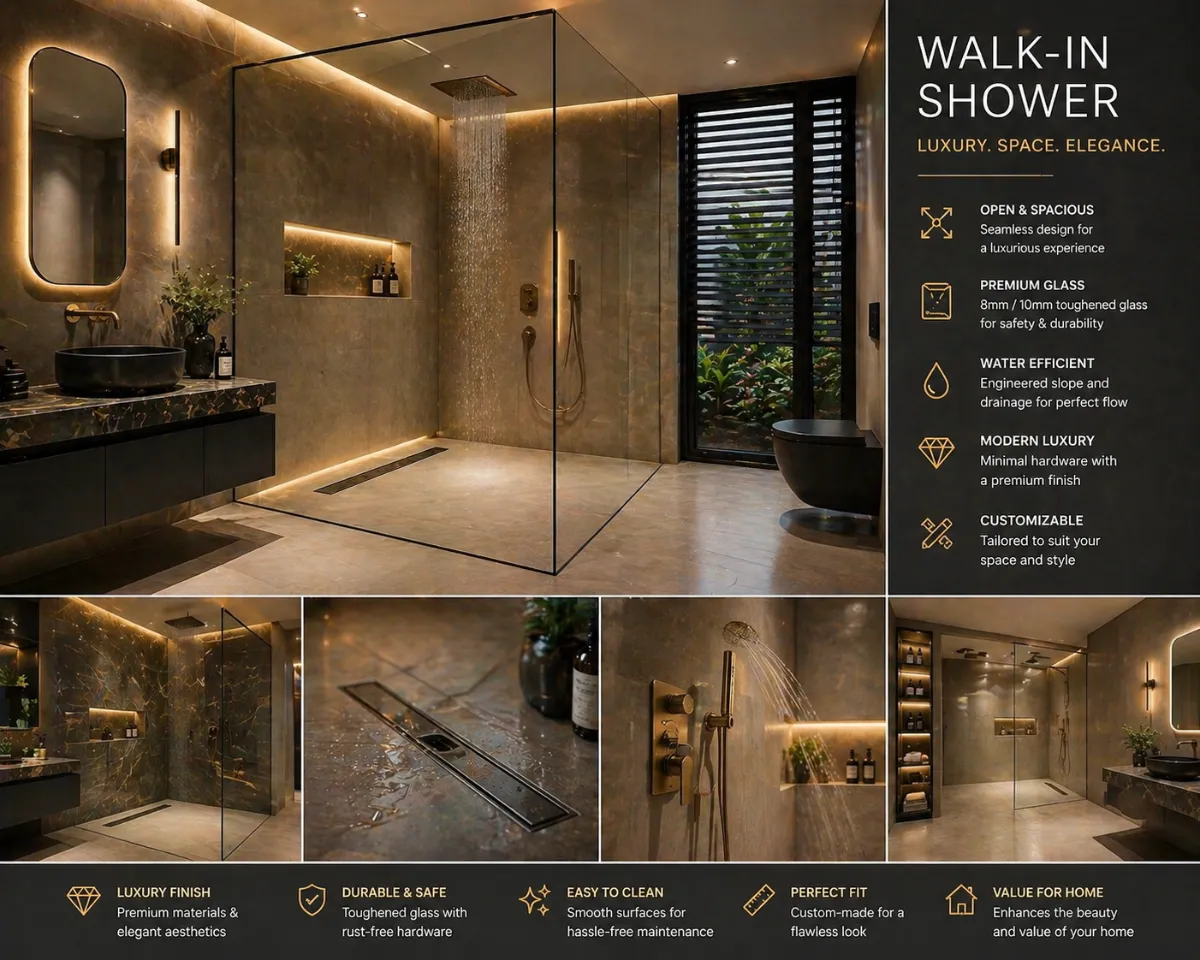
You pay for aesthetics, thicker glass, and hardware that can handle cantilevered leaves without twisting. If those do not matter to you, frameless is not obligatory — it is a preference with a price tag.
Cleaning reality
Frameless reduces metal edges you must wipe around — nice — but glass still needs routine care. Framed systems add channel corners where grime can collect if caulking ages. Neither is “self-cleaning.”
Thickness and engineering
Read shower glass thickness alongside this page: frameless designs often cluster at higher thickness on large doors; framed systems sometimes allow thinner glass where channels support the span — confirm with your vendor, do not assume.
Installation
Frameless tolerances reward meticulous installers — see shower installation cost. Framed can still go wrong, but the symptom profile differs.
Which should you pick?
Choose framed when budget is tighter, walls are imperfect, or you prefer a defined metal outline. Choose frameless when minimal visual and premium feel justify higher hardware and glass spec — and your site can support accurate fitting.
Comparison snapshot (typical India bands, indicative)
Use this table to shortlist a direction, then run the calculator above for your exact sizes.
Solution
Best when
₹/sqft hint
Article
Glass partition (hinged / fixed run)
Standard wet zone, need door swing or fixed screen